Showing posts with label hip-hop. Show all posts

Friday, October 21, 2011

Beats, Rhymes and So-Called Life


This week, Sony Pictures Classic's documentary on A Tribe Called Quest, "Beats, Rhymes and Life," comes to dvd shelves and Redbox this week. Which means it's a great time to second guess the choices of first-time director Micheal Rapport, now that we're over the joy and wonder of seeing someone treat at a hip-hop group with the same critical perspective reserved for rock bands. So, here are the top 7 things that I would've like to have seen in the movie and didn't thanks to the guy from Zebrahead.

1. Tommy Gun There was a rumor about Q-Tip and Mariah Carey back in the day. Supposedly, her husband Tommy Mattola, a record executive who allegedly knows some tough guys, got wind of this and was pissed. As the rumor goes, a contract was put out on 'Tip's life and he made himself scarce for a few months until things cooled down. I do know of a rapper who was waiting for the abstract rapper to executive produce his debut record around this time, but had to go on without him because he couldn't be found. Just so I know in case I'm on the run from the mob, where was he hiding?

2. Eye Patch Another rumor about Q-Tip, this one about an alleged altercation with Wrecks-N-Effect, a group as dated as their name sounds. Did one of their members nearly blind Q-Tip? Is that really why he wore a mask in the video for "Hot Sex"?

3. Mystery of Q We learned a lot about Phife in the film. We saw his house, his wife and his struggle with diabetes. But what about the group's leader? Q -Tip remains a mystery before and fafter the film.

4. After the Fire Selling part or all of your record collection can be an emotional experience. This guy talks about it on several of his podcasts. Imagine what it's like to have your collection, along with all of your belongings, destroyed by fire. Q-Tip knows, but he's not telling.

5. Who is Ali Shaheed Muhammad? He was almost an background artist in this film about a group he was in.

6. Beats, Rhymes and Life Rapport thought enough of this ATCQ album to name his film after it, but the film barely acknowleges its existence.

7. Rhymes & Fights Phife's brief solo career goes unmentioned, which is odd, since the director seemed driven to exploit the conflict in the band. Aside from the alleged shove in the film, Phife's video for Flawless is the only visual evidence of tribal discord.

Friday, December 25, 2009

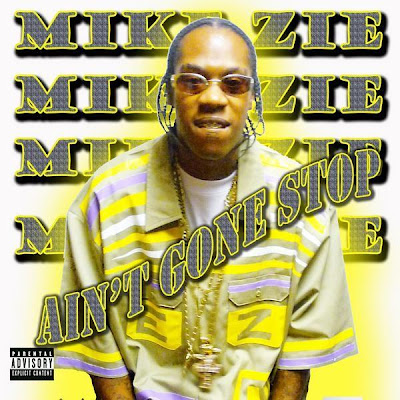
Robbery suggested as motive in rapper's shooting


The Richmond Times-Dispatch says that the two men who entered the recording studio where Michael R. Mitchell, 30, aka "Mike Ezie," was on Dec. 23 were trying to rob him.

Authorities said two males went into the building and left after Mitchell was shot. It was unclear what, if anything, was stolen. No arrests have been made.

UPDATE: Joseph Michael Rodriguez, Jr., 20, was found guilty of slaying Michael R. Mitchell, known as "Mike Ezie," on July, 14, 2010.

Thursday, December 24, 2009

South Richmond Rapper, Mike Ezie, Dies


Police are still withholding the name of local rapper killed in a recording studio last night. But sources say the victim was known as "Mike Ezie," a member of a collective of emcees known at the "Young Richmond Outcasts." Their songs include "Weirdo Stank," "Let the Cops Know Everything," and "My Buddy and Me." The group, which consists of ChiChi the Kid, Heir Borne, Jwrek, Jaesen K, Jay Dash, Real and Mike Ezie, incorporated the logo and spelling from the Atlanta rap duo, "Outkast."

One of his relatives spoke to the Richmond Times Dispatch: "This building was his life," White said on a snow-covered street outside Glenncroft. "He lived a superstar life right here in his own town. He didn't need Hollywood -- he had Hollywood right here."

The clips for "Boogie" and "By Myself," follow.


Tuesday, November 10, 2009

Bazerk is Back


That summer tour may not have materialized, but the Son of Bazerk, the cutting edge rap group that released one album in 1991, has reunited. Tony Allen aka Son of Bazerk, is in the studio with longtime Public Enemy DJ Johnny Juice and the original members of SOB. No work on a release date or distribution plans yet.

For those who slept or forgot:

Friday, July 24, 2009

The Not So Fast and Furious


Ice Cube starred in "Torque," a box office bomb that borrowed heavily from the hugely successful "The Fast and Furious." Both movies feature rappers-turnt-actors in major roles and have the characters head for Mexico when things get tough. It shouldn't come as a surprise that Neal H. Moritz, produced both films.

Fortunately I never had to suffer through this flick. Former Wavelength host Yasmine Weaver was flown to Los Angeles back in 2004 to see a preview of the film and meet the people who should be held partly responsible for it's lack of merit.

Cube was so irrelavant as a rap artist at this time, Yaz doesn't even bother to bring it up. She does mention a shot to the face he took on the set of the film, which finally gets the stone-faced O'Shea Jackson to loosen up a bit.

Tuesday, July 14, 2009

The Day Has Come, I Guess

Like murder, there is no statute of limitations on sampling. That's why Lonnie Lynn can be sued today for using the music of songwriters Andrew Andrew Marks and London McDaniels, on his debut album, nearly 20 years ago. I guess the recession has songwriters in a pinch, too.

The song, "Take it EZ," was the top single from "Can I Borrow A Dollar," one of two albums the Chicago rapper did under his original name, before a legal claim from a reggae band forced him to drop "Sense."

The original song, by a group called Rasa, follows.


Wednesday, December 17, 2008

Kwamé never played out


The interview above is taken from "Soundwave," a precursor to "Wavelength," the failed video show I produced for over a decade that inspires this blog. Soundwave was hosted by Von and Chuck and produced by another guy named Chuck. I was usually the cameraman, but for some reason, I wasn't available when they went to the Richmond Coliseum to interview DJ Quik, Nikki D, Yo-Yo and Kwamé back in 1992. I'm sure I was doing something really important that night.

I was never a Kwamé fan. I thought "Ownlee Eue" was too R&bish and "The Man We All Know and Love," didn't keep my attention. "The Rhythm," I kinda liked. But with his polka dots and bugged out hair, the Queens native seemed to be long on style and short on substance. And after Biggie dissed him so poeticly and completely on "Unbelieveable," I thought that would be the last we ever heard of him. It wasn't.

Kwamé reinvinted himself as music producer, and under the name K-1 Million he did tracks for LL Cool J, Lloyd Banks and Mary J. Blige. He's also scored scenes in some major films and has his own indie label. He recently took back his name and produced the song "Sick," for Skillz on his last album.

The talented producer is seen here as an enterprising young man, with a hunger to share his music with the world and for a certain vine-dwelling fruit.

Sunday, June 29, 2008

Skillz Goes So Far


How busy is Skillz? He shoots a video while he gets his hair cut. The veteran spitter called in a Talib Kweli to pinch hit for Common, who appears on the album version of "So Far, So Good." I guess Common was "Wanted" elsewhere.

This the latest single from the Virginia artist's perpeturally forthcoming album "The Six Million Dollar Back Pack." The latest release date: July 22.

Sunday, February 24, 2008

Ghost in Santa Monica


There's one thing I 'll admit to missing about my days in the music business. The traveling. Free airfare, free hotel rooms and the occasional per diem, there's nothing like it. I managed to scrape together one out of those three of favorite things and that was enough to get me to the 1999 Billboard Music Video Awards in Santa Monica, CA.

At one of the parties associated the show, the bill was this: Blaque, Pink (this was before she started her punctuation fixation), Kelis, Warren G and Ghostface Killah. Since this was a video convention, the front of the stage looked like a paparazzi central.

Ghostface's partner in rhyme, Cappadonna would find himself out of the rap game and on the streets of Baltimore a couple years after this performance. He reportedly worked as cab driver for about a year before returning to the clan.

Sunday, November 18, 2007

It came from 1992 - Hip-Hop at Howard University Pt. 1


While I waited for Wavelength (the video show that landed me here in VJ rehab) to gather momentum, I continued to assist with the production of another video show. I had worked with these guys for about a year and we had been through all of the ups and downs typically associated with a neighborhood garage band: egos, arguments, disappointments and rare moments of cohesion. It was one drama after another, but like a soap opera, it was hard to turn away and it seemed the story would go on forever.

Eventually things came to head and we went our separate ways. I would love to paint myself as the O'Shea Jackson of this situation, but perhaps that's not as accurate as I would like it to be. For the short time our shows were on the air together, there was some on-air static and a competitive vibe that drove both of our productions. Nobody got hurt and we're all cool now, as far as I know.

In February of 1992, before the separation, we took our one and only road trip. We attended the Hip Hop Conference at Howard University, sponsored by a group called The Cultural Initiative. It was a very progressive thought at the time, that hip-hop could be discussed and debated at a university. We packed the co-host's Thunderbird with A.J.'s gear and hit the road.

Shortly after we arrived, we realized how well-attended and serious this conference was. Rappers were walking the campus, in the hallways and hanging out in the parking lot. Some of them actually showed up for the panel discussions on sampling, commercial rap music and the role of hip-hop publications. I saw Tim Dog, Sen Dog, B Real, Marly Marl, Jam Master Jay, Posdnous, Pete Rock & C.L. Smooth, Organised Konfusion and Sister Souljah. It was a great day for hip hop and for getting drops for low-budget video shows. The way back home wouldn't be as fresh.

We, four black men in a speeding Thunderbird with tinted windows, were stopped by police on I-95. I think they may have been state troopers, but I don't recall what state they were from, it was dark. They got us out of the car and asked us if we had any "drugs, paraphernalia or loose women." We amused them with our claim that we were in the television business. I would recall this unfortunate moment years later, as I watched Robert Townsend's mythical quintet forced to perform a roadside concert by racist cops at the Southgate Cinemas.

We stood on the side of interstate in the cold darkness as they began to search our vehicle without permission. I knew I was clean, but I didn't know what someone else might be holding. Things grew tense as one of the show's hosts grew impatient with the police action. They continued despite his protest, while we all shot him the shut-the-fuk-up look. Then, one of the troopers emerged from the driver's side holding a gun by the trigger guard with a pen. I think he said something dramatic and original, like "What do we have here?"

Part 2 ... posted upon sufficient request.

Monday, September 10, 2007

Wrath of the Damaja

Artie Jefferson, the owner of the record store where this interview with Jeru the Damaja took place, was known to share his theories about artist development. I recall he and I discussing some of the thematic elements of "The Sun Rises In The East," and he said something I never forgot.

"You've got you're whole life to make that first album," he said, and then explained that coming up with another one within a shorter time frame was a challenge some new artists weren't up to.

I can't say whether Jeru's second record was rushed, but it didn't have the impact of his debut. Soon afterwards, he fell out with the Gangstarr foundation, which left him without the signature sound of DJ Premier and a association with recognized movement that's a prerequisite for rappers today.

On his second record, Jeru had the audacity to confront the forces that threatened the artistic integrity of the music he loved, while other rappers were either complicit with their silence or going with the flow. Jeru continues to fight the good fight on independent releases, but the damage is done.

Monday, July 16, 2007

A Bag and a Prayer


Preparing for a live broadcast of Wavelength was a soothing ritual I relished almost as much as the show itself. Hours before we went on, I picked out the videos from my ginormous collection of 3/4 and VHS tapes. Three quarter inch tapes, if you haven't seen one, about the size of 5 subject notebook and usually encased in a hard plastic case. They were awkward and unwieldy, but very durable. After I scripted the show, I filled my official Chicago Bears duffel bag with the tapes, usually in the same order they were on my playlist.

This was a very special bag. I got it for cheap at my day job at Burlington Coat Factory. It had a plastic bottom, a side pocket and two spacious compartments with a large C printed on both ends. The videos went in the middle of the bag, my clipboard, cassette giveways, tape recorder stashed on the ends. I couldn't have designed a better bag for what I needed. Well, I guess if it was Steelers bag, it would've been perfect.

So one day I was driving in Churchill went it struck me that I hadn't brought my bag into the house after the show. I pulled over at a gas station and opened the trunk of my '76 Camaro. The bag was gone. All my music videos, scripts, equipment were now missing in action. I drove home feeling somewhat less than whole.

It didn't take me long to determine what I done. I had brought my bag out of the studio, set it down to open the car door and left in in the middle of street. I was always forgetting little things back then, but this time I had really done it.

I moped around for a few days, considering ways to get the labels to resend the videos. It wouldn't be easy, as the tapes were heavy and shipping was expensive. I thought about the cost of replacing the lost equipment and the sentimental value of some of the things I carelessly left in the street. Days passed and hopes of being reunited with my bag began to fade.

I was walking out the door one day when my mother, may God rest her soul, told me something that stopped me cold. She said she had prayed that I someone would find my bag and return it to me. I was embarrassed she had taken my pitiful case to such a high court and I wasn't even sure I deserved my bag back.

After a week without my bag and my usual swagger, I got a call from a regional vice-president of Coca-Cola Bottling. He had found my bag in the street the night after my show, but didn't have time to track me down because his vacation started the following day. Immeasurable relief swelled over me, a feeling I didn't allow myself to anticipate.

When I told my mom, she smiled and said "I told you."

Thursday, May 17, 2007

Queens Get the Money


There was barely a buzz on Mobb Deep when they appeared on Wavelength. It was more like a hum. The group was known for their DJ Premier-produced single "Peer Pressure," off their first album. It was known that they were now producing themselves and everybody was waiting to see what they could do. Their second album, "The Infamous," was worth the wait. The duo established themselves as a benchmark for "keeping it real," and were the first to use the phrase on Wavelength.

As soon as the Queensbridge duo stepped into the Phono Booth, everybody wanted to know if what they had heard for years was true. Was Prodigy really the cousin of a local music producer? The producer's name kept coming up, the duo met each mention with implicit denials. It was explained later that they weren't exactly sure who everybody was talking about, and they weren't about to align themselves with someone whom they might not know. "Shook Ones" they weren't about to be. (Later, the claims were proven when Prodigy guested on a demo he produced.)

Prodigy's cousin, Diallo is still waitin' for a shot a remix.

Tuesday, May 15, 2007

Half Pint Pt. 2: Not the Average Chick


Rapper turnt school teacher Cassandra Jackson talks about being the only female in a group that sometimes spit misogynist lyrics, the state of hip hop and why Half Pint is for the children.

Do you ever think of picking up the mic again?

I thought of getting back in the game several times but I'm not sure people want to hear what I have to say. I'm not about capitalism, I'm about revolution. I think my stage is my classroom now. I can educate and nurture the souls and minds of young brothas and sistas with relevant information. We are reflections of each other they get what I saying, even if they don't at that moment, they know my heart and soul goes into my teaching like a performance. When they see me in the streets I can hear and see the spark I helped ignite that started in the classroom.
We are now corrupted with corporate hip hop and the essence of what it was all about got lost when the infiltrators started flashing cash for the young brothas and sistas to sell their souls. Again, I ain't tryin' to knock nobody's hustle but hip hop is supposed to be about diversity, unity, community and commentary, not capitalism, oversaturation of one form or destruction of oneself.
As consumers, we have the power to say this is what we want to hear this is hip hop. Unfortunately, its like "The Matrix," or something when someone else tells you what's hot and what's not. (say it enough people will believe) and we become the pawn in a game we once controlled because it was once pure now it's tainted. Hip hop was about braggin' and boastin' (on what we wanted not had) with ideas of improvement and upward mobility because of the conditions in which we lived in were not fit for humans and we needed to let others know we do exist we are humans.
Now that hip hop has given the opportunity to keep up with the Joneses it has become an individualistic culture. We are tryin' to take the top man down instead of standing beside them, growing and helping the community grow. The old schoolers know and understand that concept the youngsters don't. They have been brainwashed into believing that thuggin' makes you man and that sexin' makes you a woman and that money makes you better than the next person. (Let me get off my soap box.)

Have there been any attempts to reunite the group?
We never really talked about a reunion but I think that would be real fun to do after all this time. Daddy Raw does a lot of demo work with people from the area tryin' to break into business he is also working on his own project. I still have some of the outfits from those days (can't really fit them, not yet anyway) but I can't let them go, I love them.

Talk about what it was like in the studio, and the meaning of the song title "N-41."

The studio vibe was crazy. It was some long hours but is fun. I remember recording N-41 which was our last song to record and the concept as I said before was about steppin' into a different dimension ridin', rhymin' and doin' all the stuff you use to do back in the day. I thought it would be ill if when I started I did it like the twilight zone, then end up rowdy like I wanted to get things movin'. During the makin' of the album I wanted to rhyme on the mic but most of the stuff had been done before hand so I didn't have a chance to display my skills, so I thought it would be funny If I kept tryin' on this song the last song to rhyme( with hopes of more rhyming on the next album) When it was finally my turn I started out rhymin' but Bazerk threw me off because he was like, "Yo let's go this our stop (or something like that) and they were actin like they were leaving the booth while I was rhyming so that's when I said YOU DON'T KNOW ME, SO DON'T SWEAT IT ... and by the time I finished so was the reel. It was so hot it was the first and only take done, even though I had completely skipped almost an entire verse I thought that what I did fit the entire mood, craziness and fun we use to have in the studio. Keith Shocklee said "Yo, that's hot leave it just like that," and we did. We did a lot of snapping and playing jokes but it was not all fun and games. Work was first and foremost.
Anyway, N-41 was the name of the bus line that went through Freeport. If you had to ride the bus you usually took that one. We were trying to create a mental picture of gettin' on the bus entering another dimension, riding on the back of the bus rhyming like they use to do back in the days.

At the end of Honesty, there is an interlude where a club owner informs his customers, that" if they ain't buyin' nothin', don't hang around ..." I think it's the same voice at the end of "Trapped inside the Rage of Jahwell." Was this a sample? Where is it from?

The talking is actual events taking place at a bar called Fleetwood's. The
voice is the bar owner on the mic at the club one night. The guys frequented the place, I was too young to go into there.

Do you ever see any of your labelmates, the YBT?

I saw Kam about two years ago I think he still lives out here, I don't know. I believe Skribble is the only one still out there. I see everybody from time to time (not at the same time) I don't really go out, my students take up all my time and when not at work, I'm at home trying to relax. I think being on the road and touring and the fun stuff I did wore me out. I don't think I'm old, it's just going out can be hazardous to ones' health, ya know. It ain't hip hop like it use to be. I still LOVE hip hop 4 life it's just has become more of a reflection of society with no release of tension in sight.
Remember when label wouldn't even sign someone with a [criminal] record now it's a prerequisite. I am glad brothas and sistas are getting paid to do what they love but sometimes I think the cost may be too high when some are not keeping it real. And impressionable people think that's what Hip Hop is.

How did you find out that the second album wasn't going to be released?

Once we finished about 7 songs we found out SOUL was folding. We heard Rick Rubin was interested but I don't know what happened with that.

Did it bother you when Bazerk talked about pimps, ho's and bitches?

At first I had a problem with it because I thought it was disrespectful to me and other women. Unfortunately, I realized the targeted audience (men) used these terms to describe a certain kind of female I did not become familiar with until I went on the road. I still did not condone the language but I began to understand it. As usual my job was to keep the guys in check and educate the females about the issue but the females didn't buy it. The type of female they were referring to liked that they were being noticed no matter how disrespectful the message was.
Some seem to think that if your were offended then they are talking to you, but the reality is that the ones who should be offended are so lost they don't even know they are being disrespected. That is why I was a proud member of the hip hop community, where I could be apart of a group that at times could have been disrespectful to females but I was that strong minded independent woman who says straighten up and I took no sh*t.
Being the only women in the group gave me the edge to put sistas on to a brothas game but I can only lead 'em to the water I can't make 'em drink it. That's why the cut I did for the 2nd album was entitled "No Fair Ones" I was tryin to let 'em know, I ain't the average chick.
Just for reading the end of this interview, here's an unreleased Son of Bazerk track. Half Pint is all over this one. Here's Can't You See?